

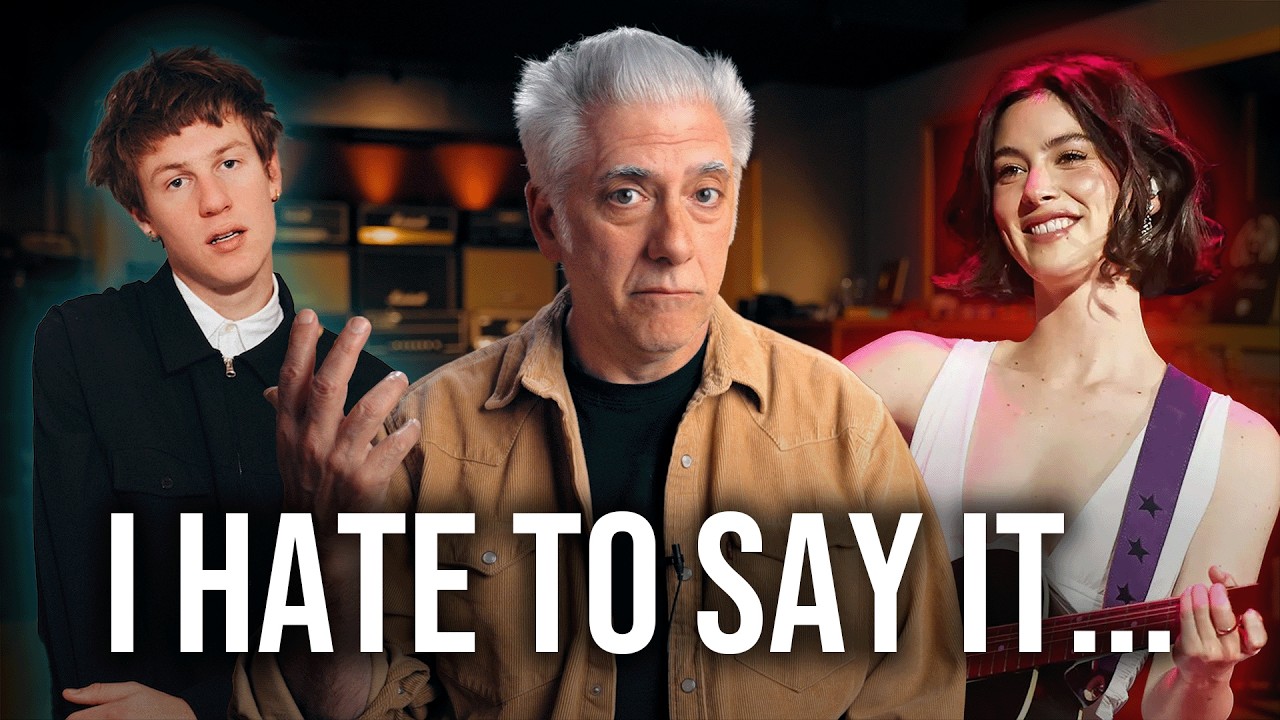
Recently, legendary producer, engineer, and music educator Rick Beato sparked a major online debate after posting a video titled “Why Only Rich Kids Make It In Music Today.” The response was immediate and emotional. Thousands of musicians flooded the comments agreeing that the modern industry feels financially impossible unless you already come from money, connections, or some form of built-in safety net.
It is not hard to understand why the argument resonated. Rent is higher than ever. Touring has become brutally expensive. Streaming payouts are microscopic for most artists. Local rehearsal spaces are disappearing in many cities. Meanwhile, mainstream pop increasingly feels dominated by artists who arrive with elite producers, management teams, entertainment-industry families, and years of invisible development already funded before the audience hears a single song.
Beato points directly at examples like Gracie Abrams, Sabrina Carpenter, and other artists connected to wealth or entertainment infrastructure as evidence that modern music increasingly rewards access over raw discovery. And to a certain extent, he is right.
But the deeper question underneath the entire conversation is one Beato never fully answers: what exactly does “making it” even mean anymore?
Because if making it means becoming a globally marketed pop celebrity with massive label backing, then yes, financial privilege matters enormously. It probably always has. But if making it means building a sustainable life through touring, licensing, publishing, direct fan support, catalog ownership, or niche audiences, then the modern industry starts looking far more complicated than a simple “rich kids versus everyone else” narrative.
That complexity is what makes the current music economy feel so strange. In some ways, the industry is more open than ever. In other ways, it feels almost completely locked down. A producer with a laptop can distribute music worldwide without label approval, but the upper levels of mainstream visibility increasingly resemble inherited wealth ecosystems where infrastructure is already in place before careers publicly begin.
The contradiction is real. So is the frustration.
Much of Beato’s argument centers around comparing today’s music industry to the one he entered during the 1990s. He describes a world of packed rehearsal facilities, active local scenes, affordable apartments, and a culture where musicians could realistically spend years developing creatively while surviving on ordinary jobs.
That ecosystem mattered because music careers once developed slowly. Bands had time to become bands before they were expected to become brands. Artists could fail publicly, improve gradually, and evolve inside local scenes before algorithms, analytics, and social media metrics became constant pressure points attached to every release.
In many cities, that middle layer of music culture really has eroded. Rehearsal spaces are disappearing. Independent venues are struggling. Touring margins are shrinking. Labels invest less heavily in artist development because streaming economics reward immediate momentum instead of long-term incubation.
The result is an industry where financial runway increasingly matters. A wealthy artist can afford years of experimentation without immediate pressure to monetize. They can pay for vocal coaching, production, visual branding, marketing, and professional collaborators while focusing entirely on development. Working-class musicians balancing rent, jobs, and survival simply do not move through the industry at the same speed.
That is probably the strongest part of Beato’s argument, and it deserves to be taken seriously. The hardest reality facing independent artists today is not necessarily becoming famous. It is affording enough time to become truly great before economic pressure forces them out of the process entirely.
But that is also where the discussion becomes more nuanced than the video sometimes allows. Because while the old middle-class music ecosystem has weakened, the industry itself has simultaneously fragmented into dozens of smaller economies operating under completely different rules than the major-label world Beato largely frames as the center of the conversation.
What He Gets Right
Beato is absolutely correct that the middle tier of music has become economically unstable in ways previous generations did not experience to the same degree. There was once a functioning ecosystem supporting musicians who were not stars but still active professionals. Regional touring circuits existed. Local production scenes mattered. Session work was more available. Physical music sales created larger margins. Artists could slowly build identities without immediately needing viral visibility.
Today, many musicians are expected to function like fully formed brands almost immediately. Social media rewards constant output. Streaming concentrates revenue heavily toward the top. Algorithms move faster than artist development does. Even independent touring often operates on razor-thin margins once travel, lodging, fuel, and promotion costs are factored in.
That creates a real psychological and financial shift in what it means to pursue music professionally. The old model allowed musicians to spend years becoming artists. The modern model often pressures musicians to become entrepreneurs first and artists simultaneously.
There is also truth in Beato’s larger point about access. Mainstream pop music increasingly operates through infrastructure-heavy systems involving management, publishing, branding, social media strategy, and professional production teams. Artists with wealthy or connected backgrounds naturally enter those environments with enormous advantages because they can survive development periods that would financially crush many independent musicians.
But the mistake is assuming this is the entire music industry.
The modern landscape is fragmented in ways previous generations never experienced. A regional hardcore band selling tickets, merch, and vinyl directly to loyal audiences operates under completely different economics than a Spotify-driven pop artist chasing playlist placement. A sync composer building television catalogs plays an entirely different game than someone trying to become a viral influencer-musician hybrid.
Those pathways are harder in some ways than older industry models. But they are also more independent.
Where Producers Go Wrong
One of the biggest mistakes modern musicians make is confusing visibility with sustainability. The internet has created a strange psychological environment where artists constantly compare themselves to celebrity-level outcomes while overlooking how many independent careers now exist quietly outside mainstream attention.
There are punk bands sustaining themselves through touring and direct fan support without major labels. There are producers earning stable income through licensing catalogs. There are composers building long-term publishing revenue through television, YouTube creators, indie games, and advertising placements without ever becoming publicly famous.
None of this means those paths are easy. In fact, many are becoming intensely competitive themselves.
Sync licensing, in particular, is often discussed online like some hidden escape hatch from streaming economics. The reality is far less romantic. The explosion of affordable production technology flooded libraries and marketplaces with music. Supervisors and editors are overwhelmed with options. Quality standards are extremely high. Metadata, organization, consistency, relationships, and catalog depth matter just as much as creativity itself.
The same thing applies to independent touring scenes. Punk, hardcore, and underground communities absolutely still exist, but they operate inside a much harsher economic environment than previous generations often romanticize. Gas is expensive. Venues close constantly. Merch production costs fluctuate heavily. Artists are competing for attention against an endless stream of online content.
This is what makes the current industry conversation so difficult to reduce into simple optimism or pessimism. Opportunities still exist, but many of them now require musicians to function like small business operators while simultaneously maintaining creative output.
That tradeoff is probably the real emotional divide underneath Beato’s argument. The question is not simply whether opportunities exist. The question is whether the modern structure of those opportunities fundamentally changes what being a musician feels like.
Real Technique Breakdown
The fragmentation of the music industry has changed production workflows significantly because music now needs to function across multiple ecosystems at once.
A professionally structured modern track may need to work as:
- A streaming release
- A sync instrumental
- A creator license
- A live performance asset
- A trailer edit
- A stem-based production tool
- A social media cutdown
That changes how producers approach arrangement, mixing, and delivery.
Mainstream playlist-focused records often prioritize loudness, immediacy, and hyper-compressed energy because they are competing aggressively for short attention spans inside algorithm-driven environments. But music intended for licensing frequently benefits from entirely different characteristics.
Editors and supervisors usually need flexibility. Overly dense arrangements can create problems for dialogue-heavy scenes. Aggressive limiting can reduce dynamic adaptability. Tracks without clean transitions or alternate versions often become difficult to use professionally.
Modern sync-friendly production commonly benefits from:
- Instrumental mixes
- Stem exports
- Controlled low-mid buildup around 200Hz to 500Hz
- More dynamic headroom
- Reduced vocal clutter
- Flexible intros and endings
- Multiple arrangement versions
Metadata infrastructure has also become one of the most overlooked professional skills in modern music. Independent artists now control ownership in ways previous generations often did not, but ownership without organization leaves enormous amounts of money inaccessible.
Professional catalogs should include:
- ISRC registration
- PRO affiliation
- Split agreements
- Publisher information
- Keyword metadata
- BPM and key tagging
- Mood descriptors
- Stem organization
A surprising number of producers struggle financially not because their music lacks quality, but because their infrastructure lacks professionalism.
Real-World Use
The first thing modern musicians need to do is define what kind of career they actually want. That sounds obvious, but many artists still operate under inherited assumptions about fame that no longer align with how the industry functions.
An artist chasing mainstream pop visibility requires one type of infrastructure. A touring underground band requires another. A sync composer requires another entirely. Trying to pursue every possible lane simultaneously often creates scattered branding, inconsistent output, and weak positioning.
That clarification needs to happen early because every later decision depends on it. Release schedules, mixing approaches, publishing strategy, collaborations, monetization systems, and audience targeting all shift depending on the ecosystem the artist is building inside.
Ownership structure comes next. In a fragmented industry, long-term leverage increasingly comes from controlling masters and publishing whenever possible. Streaming visibility alone rarely creates durable financial stability, but catalogs combined with licensing, direct audiences, and publishing administration can.
Catalog depth also matters more now than many artists realize. Modern music increasingly behaves like an asset ecosystem rather than a singular hit-driven business. Producers with large, well-organized catalogs positioned for multiple environments often create more sustainable systems than artists relying entirely on breakout moments.
That does not mean flooding the internet with low-quality music. It means understanding that long-term consistency, organization, and usability increasingly shape independent careers.
Tools and Workflow
Ironically, the actual tools required to make professional music are more accessible than ever before. Independent producers now have recording capabilities that previous generations could barely imagine without major-label budgets.
Modern workflows can be built around:
- Logic Pro
- Ableton Live
- FL Studio
- Fender Studio Pro
- Reaper
- Affordable interface chains
- Professional software instruments
- Remote collaboration systems
The bottleneck is no longer simply recording access. It is turning music into durable intellectual property instead of disposable algorithmic content.
That is why publishing and licensing strategy have become increasingly important for independent artists. Producers who understand metadata, ownership, catalog structure, licensing agreements, and publishing administration are often building far more stable systems than artists relying exclusively on streaming momentum.
For musicians interested in understanding why licensing and publishing increasingly matter in the modern economy, this article connects directly to the larger conversation:
Why Licensing Pays More Than Streaming (And Why Most Musicians Focus on the Wrong Revenue Stream)
But licensing itself should not be mythologized either. It is crowded, highly competitive, and increasingly professionalized. The producers succeeding long term are usually combining strong catalogs, operational discipline, consistent output, and relationship-building rather than simply uploading tracks and waiting for placements.
Professional Wisdom
The reason Beato’s video resonated so deeply is because many musicians genuinely feel the industry becoming emotionally and financially exhausting. And they are not imagining that feeling. The older ecosystem allowed artists to exist imperfectly for years while slowly developing identity, chemistry, and craft inside real-world communities before needing to optimize themselves constantly for visibility.
That slower culture has undeniably weakened.
At the same time, independent artists now possess forms of ownership and direct audience access that previous generations often never had. Musicians can distribute globally without labels, maintain control over masters indefinitely, build direct fan ecosystems, and monetize catalogs independently in ways that once required major industry infrastructure.
The tradeoff is that modern musicians increasingly function like entrepreneurs alongside being artists. Some thrive inside that environment. Others understandably feel alienated by it because it transforms creativity into a constant balancing act between art, branding, administration, marketing, and survival.
That is probably the deepest truth underneath Beato’s argument. He is not simply mourning the rise of wealthy artists. He is mourning the disappearance of a slower musical culture where artists had more time to become musicians before being forced to become businesses.
The industry did not disappear. But the experience of participating in it changed profoundly.
Final Takeaway
Rick Beato is right that mainstream music increasingly favors wealth, access, and long-term financial support systems.
He is also right that the economic middle of music has become far less stable than it once was.
But the modern industry is not simply “rich kids versus everyone else.” It is a fragmented ecosystem where visibility, ownership, sustainability, celebrity, and independence no longer mean the same thing.
Independent artists still have real opportunities through touring, licensing, publishing, direct audiences, and catalog ownership, even if those paths are more competitive and operationally demanding than many people realize.
The real question is no longer whether music careers still exist. It is whether modern musicians are prepared for what those careers actually require now.
No comments:
Post a Comment