

Most producers struggle with low end for one reason. The 808 sounds good on its own, the bassline sounds good on its own, but together they fall apart. You get distortion, overlap, and a muddy mix that never hits clean.
This is not a mixing problem. It is a control problem. The relationship between your 808 and your bassline determines whether your track feels professional or amateur.
This breakdown focuses on a rare Metro Boomin workflow demonstration inside FL Studio. The technique is simple, but it solves one of the most common low-end issues in modern trap production. Clean transitions between 808s and basslines without relying on complex processing.
Video Breakdown
The video shows Metro Boomin building a bassline using Nexus and aligning it with an 808 inside FL Studio. The workflow is minimal. No heavy mixing, no complex routing, and no advanced plugins.
The key focus is how the 808 and bassline interact. Instead of letting both play freely, Metro controls how they cut into each other. This prevents low-end buildup and removes unwanted distortion.
He demonstrates the problem clearly. When the 808 tail overlaps with the bassline, it creates a messy, unstable low end. The fix is not EQ or compression. It is timing and control at the source level.
What It Gets Right
The core principle demonstrated is low-end separation through note control, not processing.
Instead of stacking sounds and fixing them later, the approach ensures that only one low-frequency element dominates at any given moment. The 808 and bassline never compete. They alternate cleanly.
This works because low frequencies carry the most energy in a mix. When multiple sources overlap in that range, the result is phase issues, distortion, and loss of clarity.
Where Producers Go Wrong
The most common mistake is letting 808 tails overlap with other low-end elements.
Producers often rely on sidechain compression to fix this. While that can work, it introduces pumping and can weaken the impact of the bass.
Another mistake is ignoring pitch. An 808 that is not in key will clash with the melody and make the entire track feel off, even if everything else is correct.
Finally, many producers over-layer bass elements. Adding more low-end sounds does not increase power. It reduces clarity.
Real Technique Breakdown
Key alignment is the foundation of clean low end.
- 808s must match the key of the melody
- Basslines should follow the same tonal center
- Out-of-key low frequencies create dissonance and instability
This works because the 808 functions as both rhythm and harmony. It fails when the 808 conflicts with chord tones or melodic movement.
Sound selection defines the character of the bass.
- Nexus preset "prids side chain base" provides a controlled, consistent tone
- Layering a synth with the same melody adds thickness without clutter
This works because both layers reinforce the same musical idea. It fails when layers introduce conflicting frequencies or rhythms.
Cutting behavior controls low-end clarity.
- Use the plugin cut setting to define how sounds interrupt each other
- Match the cut group between bassline and 808
- Ensure one sound stops exactly when the other begins
This works because it eliminates overlap at the source. It fails when both sounds sustain simultaneously.
For deeper control of low-end behavior and translation, see bass processing in FL Studio.
Real-World Use
Start with tuning the 808. This must come first because every other low-end decision depends on it being in key.
Build the bassline next using a sound that complements the 808. The goal is not contrast, but reinforcement.
Check how the 808 and bassline interact before adding any processing. If they clash here, no plugin will fix it properly.
Apply cut settings so that the 808 stops when the bassline plays, or vice versa. This step removes overlap and defines rhythm.
Only after this should you consider mixing tools. Compression and EQ should refine the result, not solve structural problems.
This order matters because low-end clarity is determined at the source. Fixing it later is inefficient and often ineffective.
Tools and Workflow
- FL Studio for sequencing and note control
- Nexus (reFX) for bassline sound selection
- Dance Volume One expansion for preset access
- Standard 808 samples for low-end foundation
The workflow relies on simple tools used correctly. No additional plugins are required when the source is controlled properly.
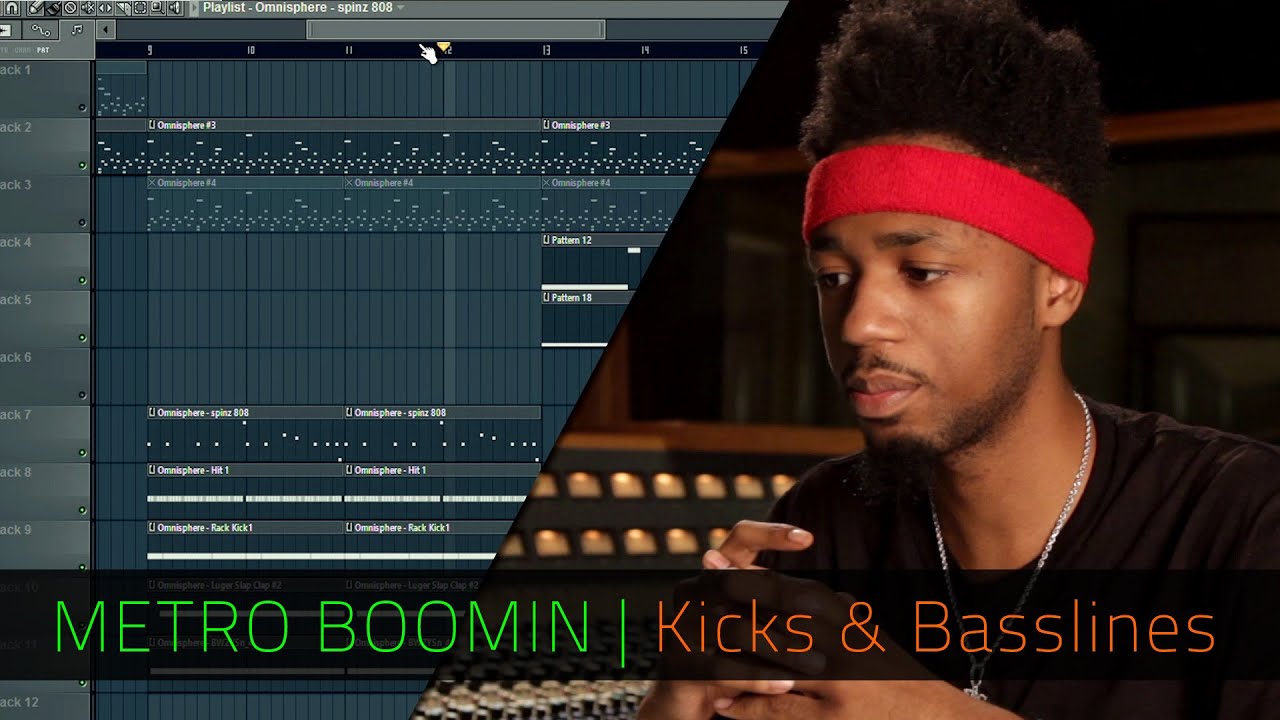
Source Video
METRO BOOMIN | Kicks and Basslines | FL Studio & Razer Music
Original tutorial featuring Metro Boomin. This article expands on the workflow with deeper production analysis and real-world application.
Professional Wisdom
This technique works because it removes overlap at the source instead of masking it with processing.
However, it is often misunderstood. The cut method is not a replacement for sidechain compression. It is a different approach entirely. Instead of reducing volume dynamically, it eliminates overlap completely.
In more complex mixes, a hybrid approach can be used. For example, combining cut settings with subtle sidechain compression allows for controlled interaction without losing sustain.
Another limitation is relying on a single preset. While the Nexus bass works well, professional producers develop multiple low-end sources to adapt to different tracks.
The key takeaway is not the preset. It is the control over how low-end elements interact.

FL Studio Free Download
Download the full version of FL Studio and start producing immediately. No time limit. All features unlocked.
Upgrade later only if you need to reopen saved projects or expand your plugin collection.
Download Free Trial Compare Editions →Final Takeaway
808s must be in key to work musically with the track.
Low-end clarity comes from separation, not layering.
Cutting overlap is more effective than fixing it later.
Sound selection matters more than complex processing.
Professional low end is controlled at the source, not in the mix.
No comments:
Post a Comment